 Counselling via MS Teams, Zoom and FaceTime available


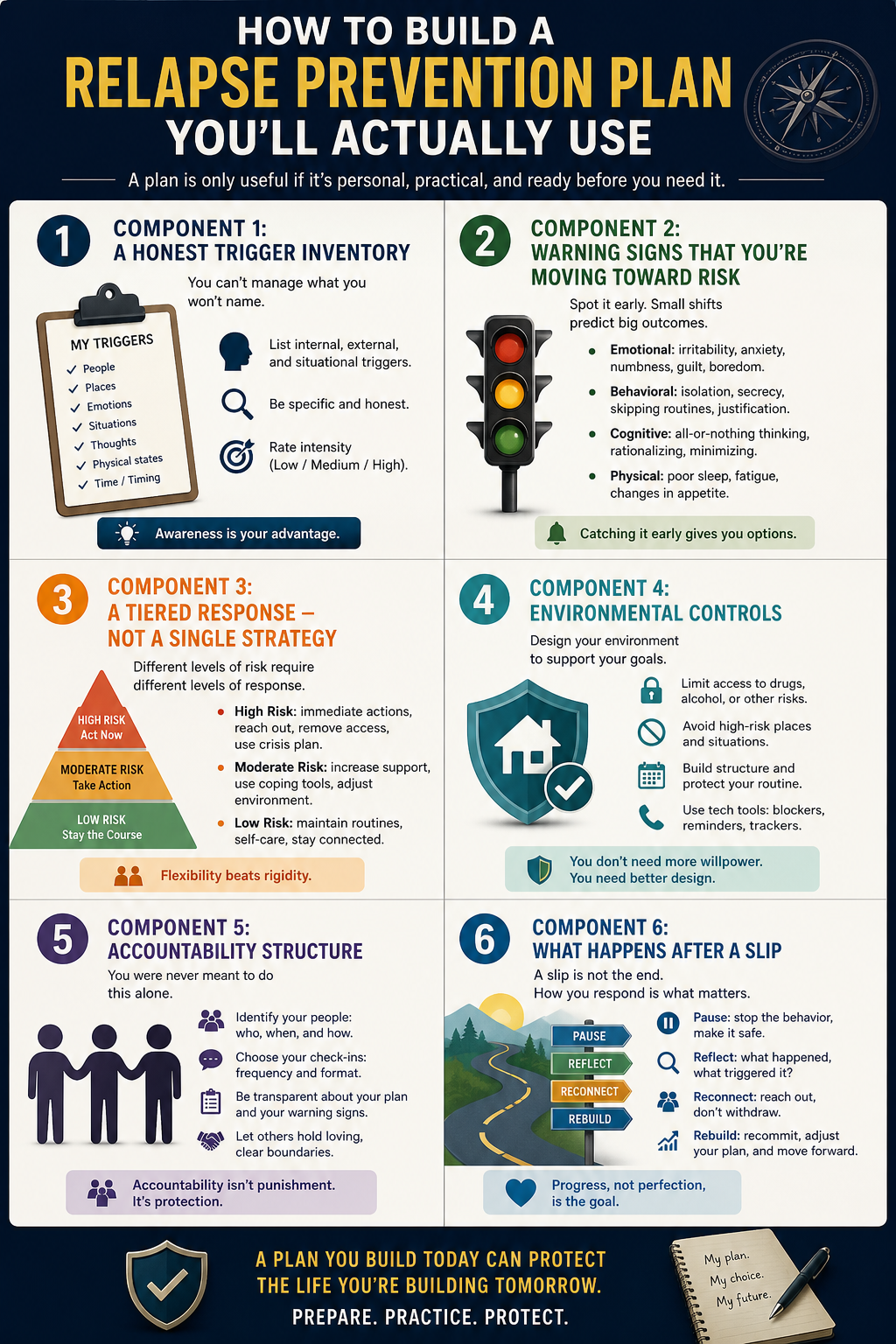
04 May How to Build a Relapse Prevention Plan You’ll Actually Use
Most people in recovery from compulsive sexual behaviour have some version of a relapse prevention plan. The honest question is: would you actually reach for it in the moment that matters?
Generic plans — the kind that look good on paper, ticked off in a therapy session, and then forgotten in a drawer — tend to fail because they were built around an idealised version of recovery, not the real texture of the person’s life. The triggers weren’t honest enough. The coping strategies weren’t specific enough. The accountability structures didn’t survive contact with a Tuesday night alone.
This guide is about building something different: a plan that is genuinely tailored, genuinely honest, and genuinely useful when the pull is real.
| A Plan Is More Effective With a Therapist ASAA’s clinical counselling includes structured relapse prevention planning — personalised to your specific triggers, vulnerabilities and life circumstances. Online Australia-wide. → Book a Counselling Session → |
Why Most Relapse Prevention Plans Don’t Work
Before building a plan, it helps to understand why standard plans fail. The most common reasons are:
- They list generic coping strategies (‘go for a walk’, ‘call a friend’) without accounting for the specific moments when walking outside or calling someone feels impossible or irrelevant
- They don’t name the real triggers — because naming them honestly is uncomfortable, so slightly sanitised versions are listed instead
- They rely on motivation, which is not a reliable resource during high-risk states
- They weren’t tested — built during a stable period, they’ve never been pressure-tested against an actual high-risk moment
- They’re too long or too complex — in a high-risk state, a five-page document is not accessible
A good relapse prevention plan is short enough to actually read under pressure, honest enough to reflect real risk, and specific enough to provide genuine guidance — not platitudes.
Component 1: A Honest Trigger Inventory
Triggers for compulsive sexual behaviour fall into several categories. Your plan needs to name your specific triggers — not just the category.
| Trigger Category | Common Examples | Your Specific Version |
|---|---|---|
| Emotional states | Stress, boredom, loneliness, anxiety, anger, shame | (write your own) |
| Environmental | Specific locations, times of day, devices, being alone | (write your own) |
| Relational | Conflict with partner, intimacy, rejection, social isolation | (write your own) |
| Physiological | Fatigue, alcohol, poor sleep, hunger | (write your own) |
| Cognitive | Specific thoughts, fantasy, rationalisation patterns | (write your own) |
The goal is specificity. Not ‘when I’m stressed’ but ‘when I’ve had a difficult meeting and I’m alone in the car on the way home’. Not ‘when I’m bored’ but ‘after 10pm when everyone is asleep and I’ve been on my phone for an hour’.
| 💚 Naming your triggers accurately is one of the most courageous things you can do in recovery. It requires you to be honest with yourself in a way that most people never are. |
Component 2: Warning Signs That You’re Moving Toward Risk
Most acting out doesn’t happen without a build-up. Learning to recognise your own warning signs — before the full craving hits — creates an earlier, more accessible intervention window. Warning signs typically include:
- A shift in mood that you begin to minimise or hide
- Increased time spent on devices or specific applications without clear purpose
- Beginning to rationalise why an exception would be acceptable
- Withdrawing from accountability relationships or support
- Specific thought patterns you recognise as precursors
Write your warning signs down specifically. Discuss them in therapy. Ask your accountability person what they notice in you before a difficult period.
Component 3: A Tiered Response — Not a Single Strategy
One of the most important structural decisions in a relapse prevention plan is building a tiered response that meets different intensity levels. A single coping strategy — even a good one — won’t work across all risk levels.
| Risk Level | What It Feels Like | Specific Response (personalise this) |
|---|---|---|
| Low — Yellow zone | General restlessness, mildly elevated craving, early warning signs | Structured activity, routine change, brief exercise, journalling |
| Medium — Orange zone | Active urge present, rationalisation beginning, clear emotional trigger identified | Use urge surfing technique, contact accountability partner, leave environment |
| High — Red zone | Urge feels overwhelming, rationalisation is convincing, isolation increasing | Call therapist or crisis contact, use 24-hour rule, physical environment change immediately |
Each tier should have a specific, named response — not just a category. ‘Call my accountability partner’ is better. ‘Call [name] on [number]’ is better still.
Component 4: Environmental Controls
Recovery is made harder by an environment that is set up to make acting out easy. A relapse prevention plan should include specific structural changes to your environment that reduce access and increase friction.
- Content filtering and device management (specific settings and tools named)
- Time-based rules for device use (specific times, specific locations)
- Physical environment changes that reduce isolation during high-risk windows
- Agreements with an accountability person about what you’ll share and when
Environmental controls are not a substitute for internal change — but they reduce the burden on willpower during the periods when it is least available. See also our practical guide on phone hygiene for recovery in Blog 5 of this document for specific technical settings.
Component 5: Accountability Structure
Accountability is one of the most well-supported components of sustained recovery. But it only works if the relationship is genuine — if your accountability person knows the real situation, not a carefully edited version.
- Name a specific person (not just ‘someone I can call’)
- Have an explicit conversation with them about what accountability looks like — what you’ll share, how often, what you need from them
- Agree on a protocol for high-risk moments — who initiates contact, by what method
- Consider whether your therapist is part of your accountability structure — individual counselling provides consistent, skilled support that can be explicitly incorporated into your plan
Component 6: What Happens After a Slip
A relapse prevention plan that only covers prevention — and not what to do if a slip occurs — is incomplete. Slips happen. The plan should include a specific protocol for after a slip that prevents it from becoming a prolonged binge or a complete abandonment of recovery (see Blog 4 in this document on handling a slip without spiralling). Key elements:
- Reach out to your therapist or accountability person within 24 hours of a slip
- Use a structured review process: what was the trigger, what warning signs were present, what gap in the plan did it reveal
- Resist the urge to catastrophise — a slip is information, not a verdict
| 💚 A plan that accounts for imperfection is a more honest and more effective plan than one that doesn’t. Recovery is not a straight line, and your plan should reflect that. |
Frequently Asked Questions
How long does it take to build a proper relapse prevention plan?
A genuinely useful plan typically emerges over several counselling sessions — as you learn more about your specific triggers, patterns, and vulnerabilities, the plan becomes more accurate and more useful. A one-session plan is a starting point, not a finished product.
Should I build a relapse prevention plan alone or with my therapist?
Both. Some elements — particularly the trigger inventory and warning signs — benefit from the honesty that comes from solo reflection. But the overall plan is significantly more effective when developed with a skilled therapist who can identify gaps, challenge rationalisations, and tailor strategies to your specific clinical profile. ASAA’s individual counselling includes explicit relapse prevention planning.
What do I do with my plan once I’ve built it?
Make it accessible — not filed away. Keep a short, crisis-accessible version where you can reach it quickly (a phone note, a card in your wallet). Review it regularly. Update it after any relapse or near-miss. Share the key elements with your accountability person.