 Counselling via MS Teams, Zoom and FaceTime available


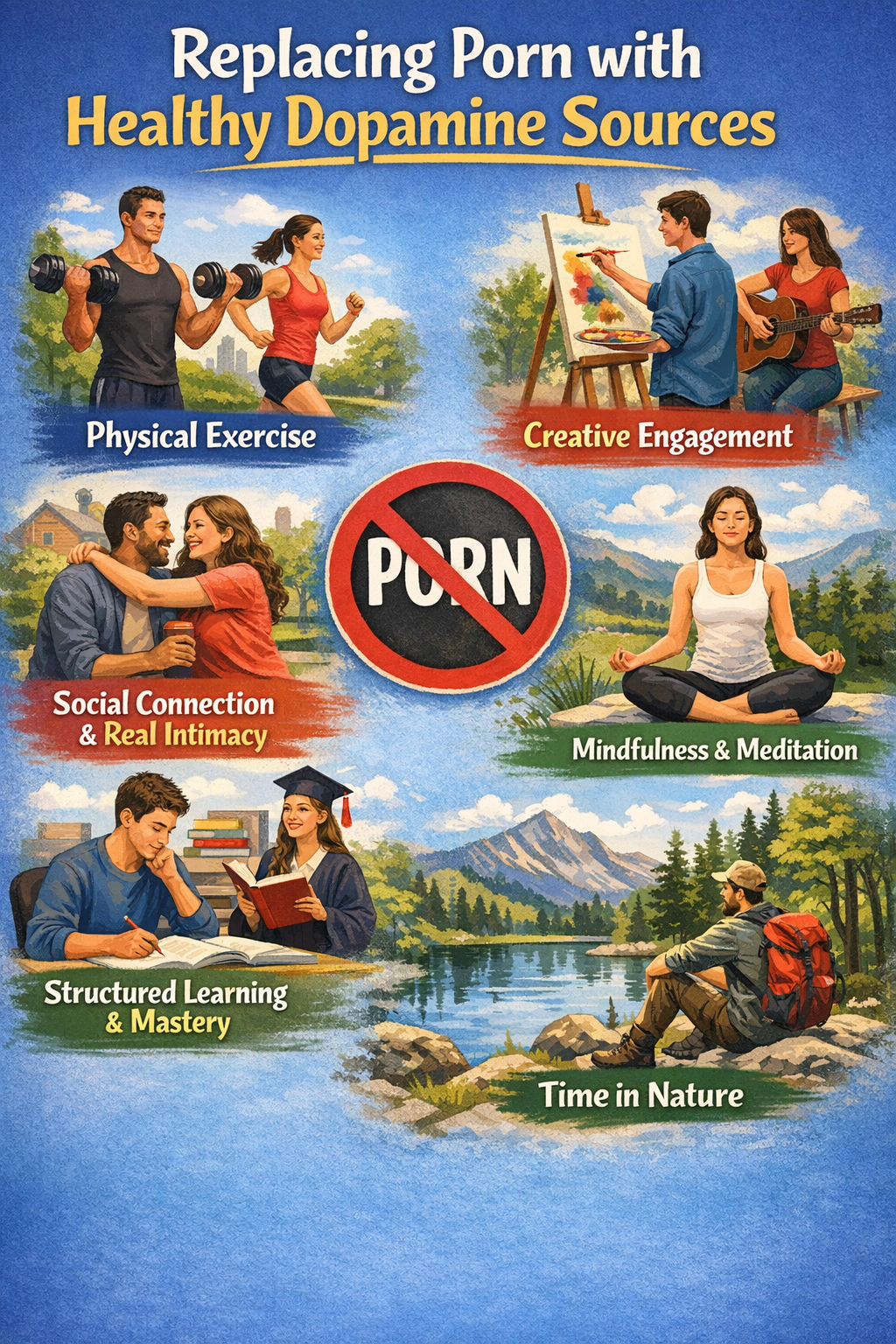
22 Apr Replacing Porn with Healthy Dopamine Sources
One of the most common questions in pornography addiction recovery is: what do I do instead? The question sounds simple, but it points to something real and neurologically significant. Pornography addiction is, in part, a story about dopamine — about the brain learning to associate an easily accessible, highly stimulating behaviour with an intense reward signal. When that behaviour is removed, the reward pathway doesn’t simply reset. It leaves a gap.
Understanding how dopamine works in addiction — and how it responds to healthier alternatives — is one of the most practically useful things a person in recovery can do. It reframes the recovery challenge from ‘resisting something’ to ‘building something’: a life in which the brain’s reward system is being nourished in ways that actually sustain wellbeing.
| Recovery From Pornography Addiction Is Possible ASAA offers specialist, confidential pornography addiction counselling — in Sydney and online Australia-wide. 25+ years of clinical experience. → Talk to a Specialist → |
What Pornography Does to the Brain’s Reward System
Pornography addiction is characterised by repeated overstimulation of the brain’s dopamine pathways. As ASAA’s clinical resource on pornography addiction explains, this overstimulation leads to measurable neurological changes — particularly in the reward, motivation, and memory circuits. The brain responds to chronic overstimulation by downregulating its dopamine receptors: essentially, it reduces its own sensitivity to dopamine in an attempt to restore balance.
The practical consequence of this process is that everyday activities — meals shared with people you care about, a good conversation, exercise, creative work, natural beauty — begin to feel flat. The brain that has been conditioned by the intense stimulation of pornography has reset its baseline for ‘rewarding’, and ordinary life falls short of it.
This is not a permanent state. The brain retains neuroplasticity — the capacity to form new pathways and restore receptor sensitivity over time. But that restoration depends on two things: removing the overstimulating behaviour, and providing healthier sources of dopamine in its place.
Why Healthy Dopamine Sources Matter in Recovery
The instinct in early recovery is often to focus entirely on avoidance — removing access to pornography, installing content filters, restructuring the environment to reduce exposure. These measures are important and necessary. But avoidance alone leaves the dopamine gap unfilled, which creates sustained discomfort and increases vulnerability to relapse.
A relapse prevention plan that includes structured engagement with healthier reward sources addresses this gap directly. It’s not about finding ‘substitutes’ in a superficial sense — it’s about genuinely rebuilding the brain’s capacity to experience reward from behaviours that are healthy, sustainable, and congruent with your values.
Healthy Dopamine Sources That Support Recovery
Physical exercise
Exercise is one of the most neurologically significant healthy dopamine sources available. Aerobic activity in particular — running, cycling, swimming, brisk walking — produces endorphin release alongside dopamine stimulation, and does so in a way that restores rather than depletes receptor sensitivity over time. Regular exercise also reduces cortisol (the stress hormone that is among the most common relapse triggers), improves sleep quality, and builds a sense of self-efficacy that directly supports self-trust in recovery.
ASAA’s holistic approaches to pornography addiction treatment specifically identifies exercise as a natural dopamine regulator — one that addresses both the neurological and the emotional dimensions of recovery.
| 💚 Even 20–30 minutes of aerobic activity three to four times a week can meaningfully support dopamine system recovery. You don’t need to run a marathon — you need to move consistently. |
Creative engagement
Creative activities — writing, music, visual art, building, cooking — engage dopamine pathways in a sustained, layered way. Unlike pornography, which delivers dopamine in a rapid, passive spike, creative engagement produces a dopamine response that builds over time as skill develops and output is created. The process of getting better at something, and of making something that didn’t exist before, is neurologically rewarding in a way that compounds with practice.
For many people in pornography addiction recovery, developing a creative practice becomes one of the most significant components of their recovery lifestyle — not because it was prescribed, but because it genuinely filled the space that pornography had occupied with something that offered meaning rather than just stimulation.
Social connection and real intimacy
Pornography addiction frequently involves a withdrawal from authentic social connection — relationships become transactional or avoidant, and genuine intimacy feels simultaneously desired and threatening. Part of recovery involves the gradual re-engagement with real human connection: conversations that require vulnerability, relationships that involve reciprocity, friendships that provide both support and accountability.
These connections are a significant source of oxytocin (the bonding neurochemical), which works alongside dopamine in the brain’s reward system. Rebuilding the capacity for real intimacy is both a recovery goal in itself and a meaningful source of neurological reward.
Mindfulness and meditation
Mindfulness practice doesn’t produce a dopamine spike — but it does something arguably more important for recovery: it gradually rebuilds the brain’s capacity to tolerate discomfort without reaching for a quick relief behaviour. In pornography addiction, the compulsive response to emotional discomfort — loneliness, anxiety, boredom, stress — is one of the primary relapse pathways. Mindfulness develops a different relationship to that discomfort: the ability to notice it, name it, and let it pass without acting on it.
Regular meditation practice has also been shown in research to support prefrontal cortex function — the brain region responsible for impulse control and decision-making, which is often compromised in addictive behaviour patterns.
Structured learning and mastery
Pursuing new skills or knowledge — a language, a trade, a sport, an academic subject — engages the dopamine system through the mechanism of incremental mastery. Each small step of progress is neurologically rewarding. Over time, the experience of becoming competent at something builds self-efficacy and a positive identity that supports recovery.
Time in nature
Research consistently supports the mood-regulating and stress-reducing effects of time spent in natural environments. Walking in bushland, swimming in the ocean, gardening, or simply sitting in a park engages sensory systems in a way that reduces cortisol and supports dopamine regulation — without any of the stimulation-escalation cycle that pornography creates.
Building a Dopamine Recovery Lifestyle: A Practical Overview
| Dopamine Source | Type of Reward | Why It Helps Recovery |
|---|---|---|
| Aerobic exercise | Endorphins + dopamine | Restores receptor sensitivity; reduces stress triggers |
| Creative practice | Sustained, skill-building | Compounds over time; produces meaning, not just stimulation |
| Social connection | Oxytocin + dopamine | Rebuilds intimacy capacity; reduces isolation (a relapse trigger) |
| Mindfulness/meditation | Cortisol reduction | Builds distress tolerance; improves impulse control |
| Learning & mastery | Incremental progress reward | Builds self-efficacy and recovery identity |
| Time in nature | Sensory regulation | Reduces stress; supports dopamine system without escalation |
What Doesn’t Work: Pseudo-Substitutes
It’s worth naming what healthy dopamine replacement is not. Simply swapping pornography for another high-stimulation, compulsive behaviour — excessive gaming, social media scrolling, gambling, or substance use — does not restore the dopamine system. It continues to overstimulate it while creating a new avoidance mechanism.
A digital detox from high-stimulation screen environments — reducing overall exposure to the dopamine-spiking feedback loops of social media, video games, and endless content streaming — is often an important companion strategy to the positive dopamine-building practices above.
The goal is not to find a new way to get a quick reward hit. It’s to rebuild a life in which the reward system is sustained by experiences that are genuinely enriching — and in which ordinary life can feel good again.
| Professional Support Makes the Difference Building healthy dopamine habits is most effective when combined with clinical treatment that addresses the root causes of addiction. ASAA offers confidential, personalised counselling for pornography and sex addiction. → Enquire About Counselling → |
Frequently Asked Questions
How long does dopamine system recovery take after stopping pornography?
The timeline varies based on the duration and intensity of addiction, individual neurological factors, and whether other supportive practices (exercise, therapy, reduced overall stimulation) are in place. Most people begin to notice some improvement in mood and motivation within weeks. More complete restoration of reward system sensitivity typically takes several months to over a year of sustained recovery practices.
Can I use pornography in moderation while building healthy dopamine habits?
For individuals who have developed compulsive pornography use — characterised by loss of control and ongoing use despite negative consequences — moderation is generally not a realistic goal without significant clinical intervention. This is because the addictive pattern continues to overstimulate the reward system while the healthy habits are attempting to restore it. Complete abstinence from compulsive behaviour, supported by professional treatment, is the approach recommended by ASAA.
What is the fastest way to increase dopamine naturally?
Aerobic exercise produces the most immediate and significant natural dopamine response. A 20–30 minute run or cycle session can produce a measurable shift in mood and motivation. Over time, combining exercise with creative engagement, social connection, and structured learning builds a more sustained and resilient dopamine baseline.
Is pornography addiction different from sex addiction?
Pornography addiction is one specific form of compulsive sexual behaviour disorder, which also includes other patterns of sexually compulsive behaviour. At ASAA, both pornography addiction and broader sex addiction are treated through personalised programmes tailored to each person’s specific history and circumstances.
Can healthy dopamine habits replace professional treatment?
They are a powerful complement to professional treatment, but not a replacement for it. Pornography addiction has psychological, neurological, and often trauma-related roots that lifestyle habits alone are unlikely to fully address. The most effective recovery combines clinical treatment with the kinds of supportive lifestyle practices described in this article.