 Counselling via MS Teams, Zoom and FaceTime available


15 Jun How Social Media Algorithms Can Trigger Sexual Relapse
Recovery from sex addiction or pornography addiction is rarely a single, dramatic decision. It is a sustained process built on new patterns of thought, behaviour, and environment. And increasingly, that environment includes a digital world designed by some of the most sophisticated engineers on the planet to capture and hold your attention, regardless of the cost to you.
Social media algorithms do not care about your recovery. They are not hostile to it, but they are entirely indifferent to it. Their purpose is engagement, and for people in recovery from pornography addiction or compulsive sexual behaviour disorder, this indifference creates a genuine and underestimated relapse risk.
| You Do Not Have to Navigate Recovery Alone ASAA provides confidential, specialist counselling for sex and pornography addiction across Australia. Online and in person. Book a Confidential Consultation |
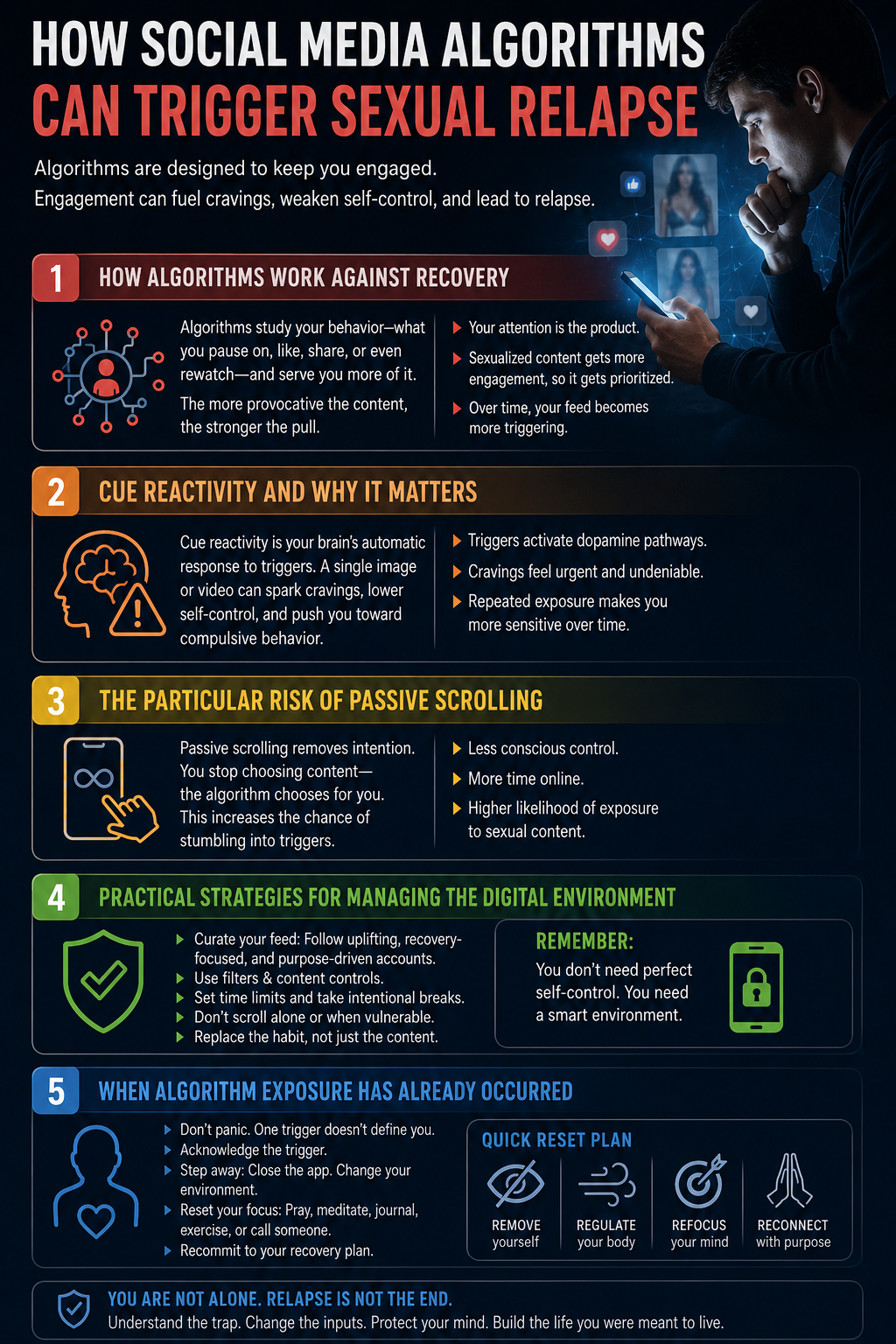
How Algorithms Work Against Recovery
To understand the risk, it helps to understand how recommendation algorithms function. Platforms such as Instagram, TikTok, X (formerly Twitter), and Reddit do not simply show you content from accounts you follow. They actively surface content predicted to generate the highest level of engagement from you, based on every interaction you have ever made on that platform.
For someone with a history of compulsive sexual behaviour, this creates a specific vulnerability. Early in their addiction history, their engagement patterns will have included sexual content. Algorithms do not forget. They continue to test and re-test categories of content that have previously generated a response, often serving material that is not explicitly sexual but is adjacent to it, material that functions as a cue without meeting the threshold of being overtly problematic.
This is not accidental. It is the mechanism by which variable reward schedules operate: intermittent delivery of stimulating content creates the strongest possible drive to continue scrolling. This is the same neurological mechanism that underlies the compulsive behaviour pattern in sexual addiction itself.
Cue Reactivity and Why It Matters
A central concept in addiction neuroscience is cue reactivity. The brain in recovery remains sensitised to cues associated with past addictive behaviour, even when the person is no longer actively engaging in that behaviour. Exposure to a cue, which can be a visual, auditory, emotional, or situational trigger, activates the same neural circuitry that drove the original behaviour and produces a craving response.
For people recovering from pornography or online sexual behaviour, social media platforms are saturated with potential cues. These are not limited to explicit content. They can include:
- Images of people in particular styles of dress or pose
- Provocative language in advertising or promotional posts
- Relationship or intimacy-related content that activates loneliness or disconnection
- Boredom or emotional dysregulation triggered by passive scrolling itself
- Notifications, autoplay, and infinite scroll features that eliminate natural stopping points
The cumulative effect of sustained cue exposure is a gradual weakening of the behavioural inhibition that holds the compulsive pattern in check. This is sometimes described as the person’s recovery becoming progressively more effortful, before a relapse that, in retrospect, was preceded by weeks of incremental digital exposure.
| 🌿 Understanding cue reactivity is not about blame. It is about building an accurate map of risk so that recovery can be structured around it. A person who understands their cues has a meaningful advantage in managing them. |
The Particular Risk of Passive Scrolling
There is an important distinction between actively searching for sexual content and passively encountering it. Many people in recovery manage deliberate searches well. They have installed filtering software, established clear rules, and built accountability structures. What they underestimate is the risk of passive scrolling.
When scrolling is passive and unstructured, the executive control system in the prefrontal cortex, the part of the brain responsible for decision-making and impulse regulation, is relatively less engaged. The default mode network, associated with mind-wandering and emotional processing, becomes more active. In this state, cue reactivity is heightened and inhibitory control is reduced. The brain is, in a meaningful sense, more vulnerable.
This is directly relevant to online sexual behaviour patterns where the transition from passive scrolling to active engagement with sexual content often happens faster than the person consciously registers until the pattern is already in motion.
Practical Strategies for Managing the Digital Environment
Managing algorithmic risk in recovery is not primarily a matter of willpower. It is a matter of environmental design. Strategies that have proven effective include:
- Content restriction and filtering: installing accountability software on all devices creates a technical barrier between the cue and the behaviour, and adds an element of external accountability
- App removal: removing high-risk applications from personal devices entirely, rather than relying on the intention not to open them
- Time-limited and purposeful use: replacing unstructured scrolling with intentional, time-limited use for a specific purpose, then closing the application
- Notification management: disabling push notifications removes one of the primary interruption mechanisms that draws people back to platforms outside their planned usage windows
- Regular self-audit: periodically reviewing what the algorithm is surfacing and actively marking content as ‘not interested’ to progressively reshape the recommendation environment
- Accountability conversation: discussing digital risk openly with a therapist or accountability partner, including disclosing when algorithm exposure has occurred
| On filtering software Filtering tools are a practical support, not a replacement for therapeutic work. The goal of recovery is not external control but developed internal capacity. Filtering buys time and reduces risk while that capacity is being built through clinical support. |
When Algorithm Exposure Has Already Occurred
If you have been exposed to triggering content through a social media platform, the response matters. Shame about the exposure, or about a craving response that followed it, is counterproductive. Cue reactivity is a neurological phenomenon, not a moral failure.
The more productive response involves: noting what happened without judgment, identifying the context in which the exposure occurred, discussing it in your next therapy session or accountability check-in, and reviewing whether your current digital environment management needs adjustment.
A relapse, or a near-relapse, is information. Brought into therapy rather than hidden from it, it becomes one of the most useful points of progress in recovery. Heide McConkey at ASAA works with individuals in precisely this way, building a map of individual cue landscapes and developing specific, personalised strategies for managing them.
| Take the Next Step Confidentially ASAA offers specialist sex and pornography addiction counselling in Sydney and online across Australia. Your call is completely confidential. Call (+61) 419 430 534 or Book Online |
Frequently Asked Questions
Can I use social media at all in recovery from pornography addiction?
Many people in recovery do use social media, with carefully managed boundaries and digital environments. The question is not whether to use it but how, and with what safeguards in place. This is worth discussing specifically with your treating therapist, who can help you design an approach suited to your individual cue landscape and stage of recovery.
Is algorithm exposure the same as deliberately searching for sexual content?
Not in terms of intent, but the neurological response to cue exposure can be similar regardless of whether the exposure was sought or encountered passively. Intent matters from an accountability and self-compassion perspective. The neurological response is worth taking seriously either way.
What is the best filtering software for porn addiction recovery in Australia?
Several options are available and well-regarded in the addiction recovery community. Your treating therapist or specialist counsellor can advise on appropriate tools based on your specific device use patterns. The eSafety Commissioner’s website (esafety.gov.au) also provides information relevant to Australian users.