 Counselling via MS Teams, Zoom and FaceTime available


10 Aug The Role of Fantasy in Escalating Sexual Addiction
Sexual fantasy is a normal part of human sexuality. It is also, in the context of compulsive sexual behaviour disorder (CSBD), one of the least-discussed aspects of how the condition develops, maintains, and escalates. Many people in the early stages of seeking help for sexual compulsivity have not fully considered how their fantasy life has shifted over time, or what function fantasy is serving in their behavioural cycle.
At Sex Addiction Australia (ASAA), the exploration of sexual fantasy patterns is a significant part of the clinical work with clients experiencing CSBD. Heide McConkey, ASAA’s founder and principal counsellor, has over 25 years of experience working with the fantasy dimensions of compulsive sexual behaviour. Confidential counselling is available online and face-to-face.
| Confidential Counselling from ASAA Professional sex addiction counselling online and face-to-face. 25+ years. Call 0419 430 534. |
Fantasy as Part of the Addiction Cycle
In the established model of sexual addiction cycles, the period leading up to the behaviour itself is characterised by a particular mental state involving anticipatory fantasy. This phase is sometimes called the preoccupation or trance phase: the person becomes increasingly absorbed in sexual thoughts and fantasies as part of the preparation for the compulsive act.
Fantasy in this context is not neutral. It generates neurochemical arousal that builds the motivational pressure toward the behaviour. It also serves as a mental rehearsal: by the time the behaviour is occurring, the fantasy has already been running, making the behaviour feel inevitable rather than chosen.
How Fantasy Escalates Over Time
Habituation
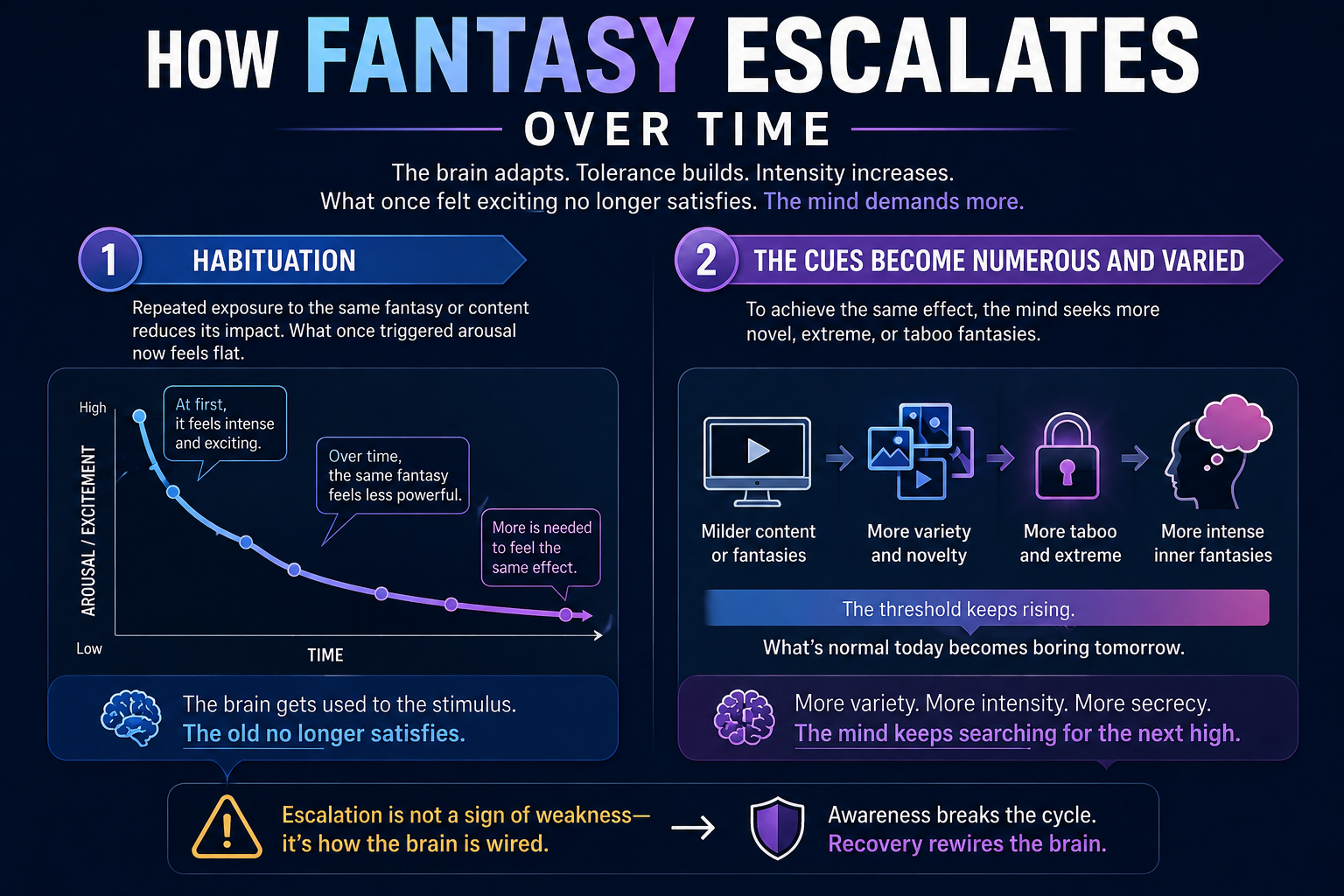
One of the most consistent observations in sexual addiction research is that the content of sexual fantasy tends to escalate over time. The mechanism is habituation: a stimulus that is repeated consistently loses its capacity to generate the same level of arousal. To maintain the same neurochemical response, the fantasy must become more novel, more intense, or more extreme than before.
This escalation does not feel like a deliberate choice. It feels like a gradual drift toward different content as previous content becomes less stimulating. The person may not notice the progression until they look back over months or years and recognise how far the content has shifted from where it began.
Fantasy and pornography
For people whose compulsive sexual behaviour involves pornography use, the escalation of fantasy and the escalation of pornography content are often intertwined. The availability of an almost unlimited range of sexual content online means that the escalation is facilitated without practical constraint. This technological dimension of modern sexual compulsivity is a significant factor in how quickly escalation can occur and how wide a range of content can be involved before the person recognises a problem.
What Fantasy Is Doing Beneath the Surface
Understanding the function of sexual fantasy in a specific person’s experience is more clinically useful than simply identifying that it is present. Fantasy in compulsive sexual behaviour often serves one or more of the following functions:
- Emotional escape: fantasy provides a temporary exit from difficult emotions, stressful circumstances, or interpersonal pain. It creates a mental space where the distress of real life is suspended
- Control and power: for people who feel powerless or overwhelmed in their daily lives, sexual fantasy can provide a sense of absolute control over the narrative and all participants
- Intimacy substitute: for people who find genuine emotional intimacy threatening or unavailable, fantasy provides a form of pseudo-intimacy that delivers some of the neurochemical reward of connection without the vulnerability
- Shame management: counterintuitively, shame itself can become a stimulus for sexual fantasy in some people, creating a cycle where shame about the sexual behaviour triggers more fantasy and behaviour as a way of managing the shame
Treatment Work with Fantasy Patterns
Therapeutic work on the role of fantasy at ASAA involves both understanding what the fantasy is doing (its function in the person’s emotional economy) and developing the skills to intervene earlier in the fantasy-to-behaviour sequence. This includes recognising the onset of the preoccupation phase, identifying the emotional state that triggered it, and developing alternative responses to that emotional state that do not involve escalating sexual fantasy.
The goal is not the suppression of all sexual fantasy: that is neither achievable nor desirable. The goal is the development of a healthy relationship with sexual fantasy, where it is a chosen experience rather than an automatic one, and where it does not escalate toward content that creates shame, harm, or a compulsive behavioural sequence.
| Explore Your Recovery from Sexual Compulsivity with ASAA Online and face-to-face counselling. Confidential. 25+ years experience. Call 0419 430 534. |
Frequently Asked Questions
Is it possible to be addicted to fantasy rather than behaviour?
Yes. Compulsive sexual fantasy (sometimes called paraphilic fantasy or hypersexual fantasy) can constitute a significant component of CSBD even where the fantasy is not always followed by observable compulsive behaviour. The preoccupation and mental absorption of compulsive fantasy can significantly impair daily functioning, relationships, and quality of life in its own right.
Will I have to describe my fantasy content to a counsellor?
ASAA’s therapeutic approach to fantasy does not require detailed disclosure of specific fantasy content as a starting point. The initial focus is on the emotional and functional role of fantasy in the person’s experience, not on the content itself. Disclosure of content happens within the therapeutic relationship as trust develops and as clinical relevance is established. Contact ASAA to discuss any questions about the counselling approach before booking.