 Counselling via MS Teams, Zoom and FaceTime available


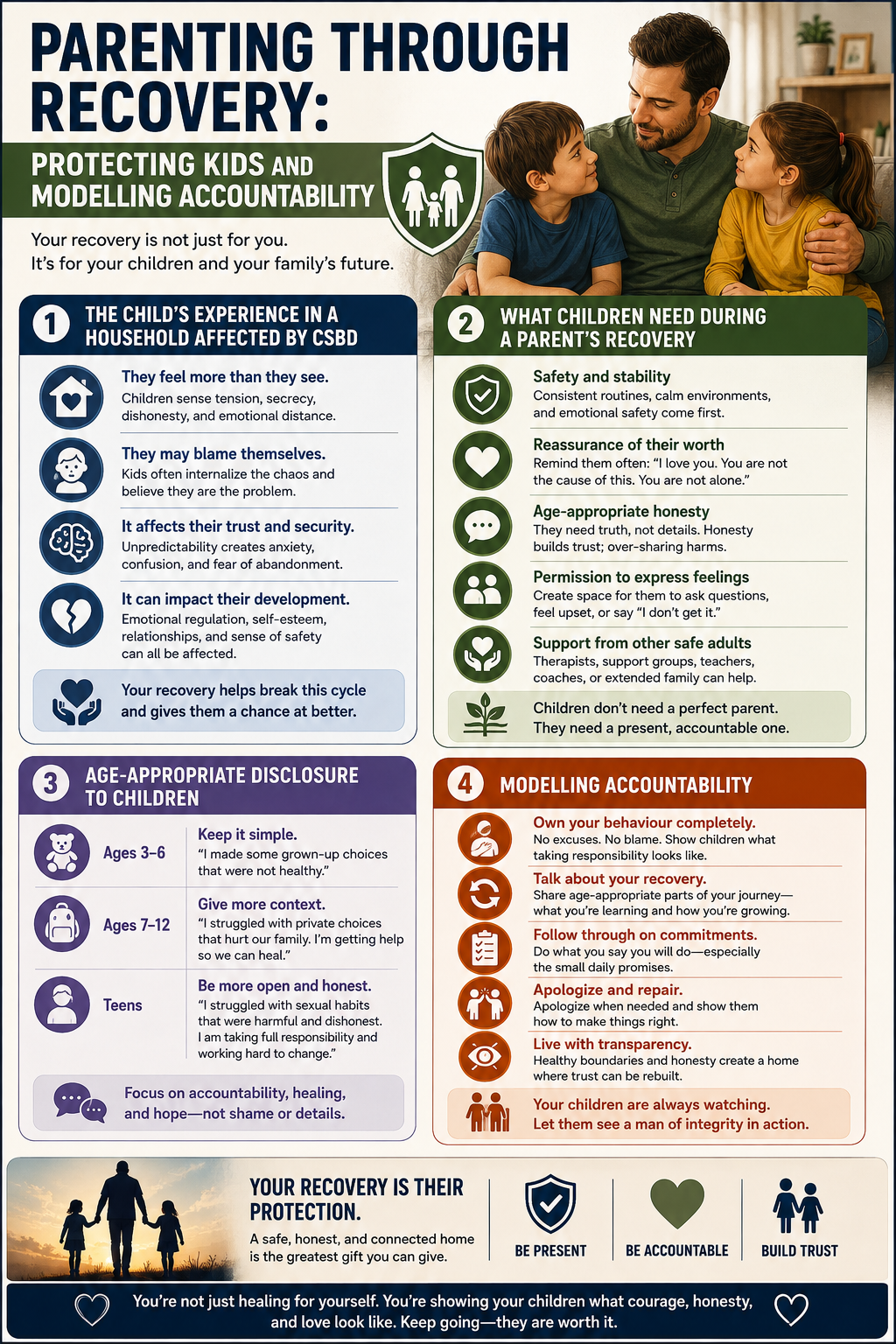
10 Aug Parenting Through Recovery: Protecting Kids and Modelling Accountability
Recovery from compulsive sexual behaviour disorder (CSBD) takes place in real life, in real families. For parents in recovery, the process of facing and addressing their behaviour happens alongside the daily realities of school runs, homework, bedtimes, and the complex emotional demands of raising children. The intersection of recovery and parenting is one of the most challenging and least discussed aspects of the CSBD recovery journey.
At Sex Addiction Australia (ASAA), Heide McConkey works with individuals and couples navigating recovery within a family context. With over 25 years of experience in sexual addiction counselling and relationship therapy, her approach addresses the specific challenges parents face. Confidential counselling is available online and face-to-face.
| ASAA: Counselling for Individuals and Couples in Recovery Online and face-to-face. Confidential. 25+ years. Call 0419 430 534.Book a Confidential Appointment |
The Child’s Experience in a Household Affected by CSBD
Children in households where a parent has CSBD are not always directly aware of the specific nature of the problem, but they are rarely unaware that something is wrong. Children are highly attuned to emotional tension, parental absence (physical or emotional), conflict between their parents, and the anxiety of a parent who is struggling. The distress of a parent, and the distress within a partnership, communicates itself to children even when adults believe they are successfully concealing it.
The goal in parenting through recovery is not to achieve a performance of normality that conceals the difficulty. The goal is to create genuine safety and stability for children while the adults work through a real and significant challenge.
What Children Need During a Parent’s Recovery
- Consistency and routine: the bedrock of children’s security is the predictability of their daily environment. Maintaining consistent routines, bedtimes, mealtimes, and school arrangements during the disruption of recovery creates a stable container for the child even when the adult world around them is not fully stable
- Emotional availability: children need at least one emotionally available, calm parent. If one parent is deeply consumed by the demands of early recovery, the other parent’s emotional presence becomes particularly important. Children should have space to express their feelings without being drawn into adult conversations or used as emotional support for the parent in recovery
- Protection from adult conflict: if the discovery of CSBD has precipitated significant conflict in the parental relationship, children should be protected from exposure to that conflict. Arguments, accusations, and emotional breakdown between parents in front of children create fear and insecurity that children carry long after the immediate crisis has passed
- Age-appropriate honesty: children who ask questions about the tension or difficulty they are sensing deserve age-appropriate honest responses, not dismissal. ‘Things are difficult between Mum and Dad at the moment, but we are both working to make things better, and you are safe and loved’ is more protective of a child’s mental health than ‘Everything is fine’
Age-Appropriate Disclosure to Children
Parents in recovery often ask whether and when to tell their children what has happened. The answer is not a single one. It depends on the age and maturity of the children, on whether the children have already been exposed to information about the situation, and on the stage of the recovery and the relationship.
- Young children (under seven): do not need and cannot process information about sexual addiction. What they need is emotional safety and the message that both parents love them and that adults are working things out. Focus on stability, not disclosure
- Older children and teenagers: older children, particularly teenagers who are aware that something significant has happened in the family, may need more information to process what they are observing. A carefully considered, age-appropriate disclosure that names the difficulty without details inappropriate for the child’s age can be more supportive than continued opacity. Family therapy with a qualified family therapist can assist with this process
Modelling Accountability
One of the unexpected dimensions of recovery that parents sometimes discover is the opportunity it provides to model something genuinely valuable for their children: what real accountability looks like.
A parent who is in recovery and who is honest with themselves, who takes responsibility for the harm their behaviour has caused, who seeks professional help and works consistently over time to change, is demonstrating accountability in a way that children observe even without explicit explanation. This modelling is not an argument for disclosure: it is an argument for genuinely living the recovery process rather than performing it.
Children who see a parent take genuine responsibility for difficult behaviour, without denial, without blame-shifting, and without a pretence of perfection, receive a lesson about how adults manage mistakes and failures that can be among the most valuable things they ever learn.
| Parenting Through Recovery: Speak with ASAA Individual, couple, and family-context counselling for sexual addiction recovery. Call 0419 430 534.Book a Consultation |
Frequently Asked Questions
Should I tell my children why their other parent and I are in conflict?
Children should not be used as confidants, messengers, or allies in parental conflict. They should not be given information about a parent’s behaviour that is age-inappropriate or that creates fear, shame, or divided loyalty. At the same time, children who clearly sense that something serious has happened deserve honest acknowledgement that things are difficult and consistent reassurance that they are safe and loved. The specific nature of what has happened is a question for family therapy, not a general rule.
Can ASAA help with the partner’s recovery as well?
Yes. ASAA’s partner support service specifically addresses the experience of the partner of a person with CSBD, who is dealing with their own form of trauma from sexual betrayal alongside the demands of parenting. Heide McConkey works with both individuals and couples navigating the recovery process.