 Counselling via MS Teams, Zoom and FaceTime available


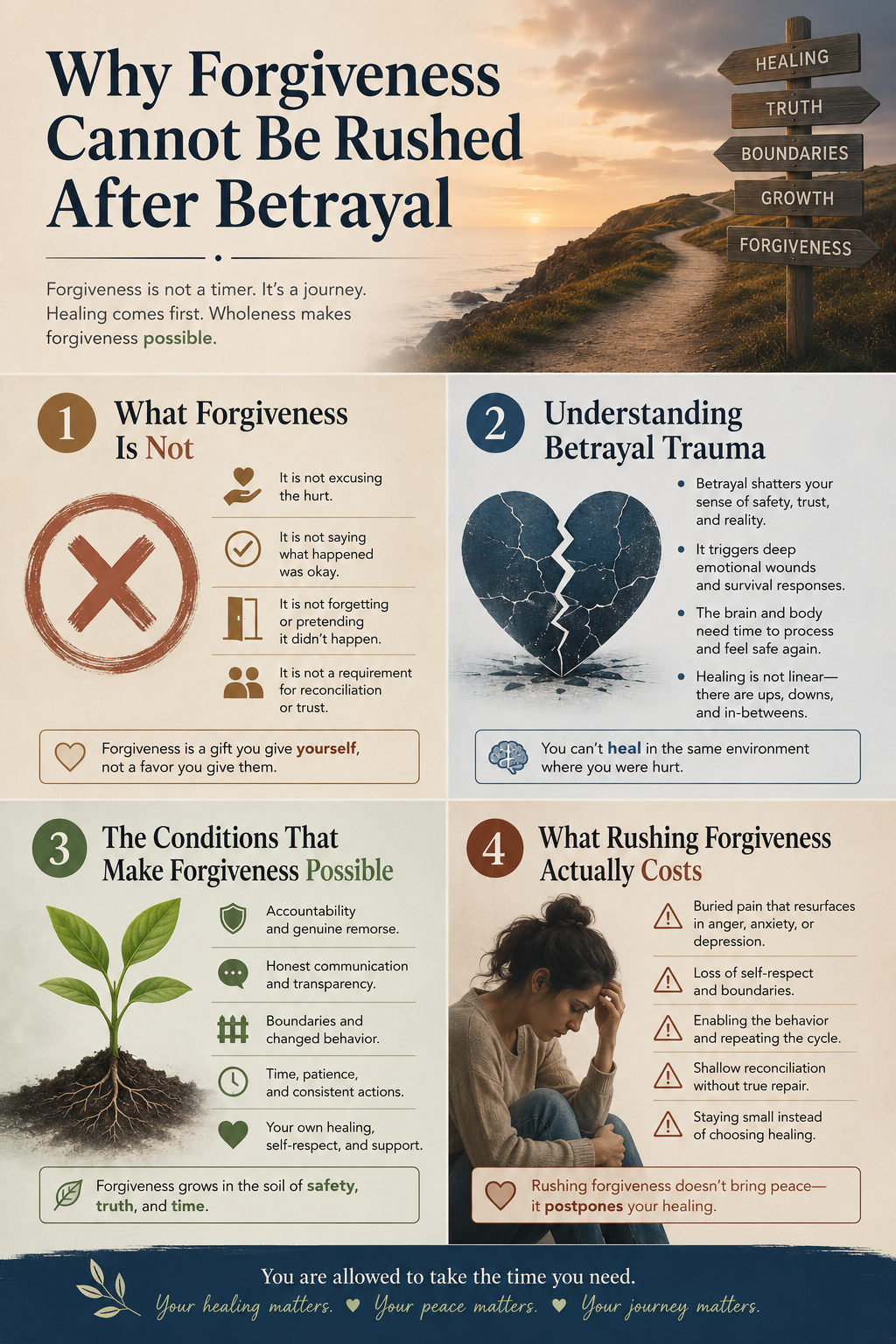
15 Jun Why Forgiveness Cannot Be Rushed After Betrayal
When a partner discovers that the person they love and have built their life with has been living a secret sexual life, the emotional impact is profound and disorienting. The discoveries often do not arrive in one clear moment but accumulate in waves: first a revelation, then the uncovering of further details, then the gradual realisation of how long the deception has been sustained.
In the aftermath of this, pressure around forgiveness tends to arrive early. It can come from the addicted partner, who is in early recovery and anxious about the relationship’s survival. It can come from well-meaning friends, family, or even from some therapeutic settings. It can come from within the betrayed person themselves, who may believe that moving toward forgiveness quickly is a sign of emotional strength or maturity. ASAA’s specialist support for partners of sex addicts consistently addresses this pressure, and the harm it can cause when it substitutes for genuine healing.
What Forgiveness Is Not
Before addressing what forgiveness requires, it is worth being precise about what it does not require. Forgiveness does not mean:
- Excusing or minimising what happened
- Reconciling the relationship, which is a separate decision that may or may not be made
- Ceasing to feel pain, grief, or anger about what occurred
- Trusting the person who caused the harm before trust has been rebuilt through sustained evidence
- Reaching the forgiveness destination before the journey of healing has been undertaken
This distinction matters enormously because many partners of sex addicts have been implicitly or explicitly told that if they have not yet forgiven, they are somehow failing the recovery process. This message compounds the harm of the original betrayal by placing the responsibility for the relationship’s healing onto the person who was harmed rather than the person who caused the harm.
Understanding Betrayal Trauma
Sexual betrayal trauma, also termed Sex Addiction Induced Betrayal Trauma (SAI-T) in clinical literature, is not simply the emotional pain of discovering infidelity. It is a disruption of the fundamental attachment system. Human beings rely on their primary relationship as a source of safety, predictability, and reality. When sustained deception is revealed, it does not only communicate that a specific thing happened. It communicates that what the person believed to be true about their relationship, and in many cases about their own perception and judgement, was not true.
Research by Dr Barbara Stephens and Marsha Means found that approximately 70 percent of partners of sex addicts score positive for symptoms consistent with post-traumatic stress disorder. Partners in this situation commonly experience intrusive thoughts, hypervigilance, emotional dysregulation, sleep disruption, and a shattered sense of personal reality. These are not signs of weakness or fragility. They are the nervous system responding accurately to a profound relational threat.
| On partner support A partner’s trauma response does not resolve on the addicted person’s recovery timeline. These are separate processes that often need to happen in parallel but at different paces. Expecting a partner to reach forgiveness because the addicted person has begun recovery misunderstands the nature of betrayal trauma. Both people need support, typically through their own individual therapeutic work. |
The Conditions That Make Forgiveness Possible
Genuine forgiveness, when it comes, is rarely a moment. It is an outcome of a process that requires several conditions to be in place. Rushing toward the outcome before those conditions are met produces something that may look like forgiveness but does not carry its qualities.
Safety
The betrayed partner needs to feel physically, emotionally, and relationally safe before the psychological work of processing betrayal can begin. This means the addicted partner’s behaviour has actually stopped, that there is transparency rather than continued concealment, and that the trauma of the original discovery is being taken seriously rather than minimised.
Truth
Forgiveness cannot be built on a partial account. When details continue to emerge over time, what clinical practitioners sometimes call staggered disclosure, each new revelation restarts the trauma cycle and undoes whatever processing has occurred. A full and honest accounting, provided with therapeutic support, is a prerequisite for genuine healing rather than an obstacle to it.
Acknowledgment
Many partners describe the experience of the addicted person minimising the impact of their behaviour as one of the most damaging elements of the aftermath. Genuine acknowledgment, without defensiveness or redirection to the addict’s own suffering, creates the relational conditions in which healing becomes possible.
Time and therapeutic support
Betrayal trauma is treated, not simply moved past. Specialised partner support counselling at ASAA provides the therapeutic space in which the full complexity of what has occurred can be processed: the grief, the disorientation, the anger, the questions about self-worth, the uncertainty about the relationship’s future. This cannot be hurried by anyone else’s timeline.
What Rushing Forgiveness Actually Costs
When a partner is moved toward premature forgiveness before the above conditions are in place, several things tend to happen:
- The unprocessed trauma remains present beneath a surface agreement to forgive, and surfaces later, often with greater force
- The partner loses trust in their own emotional reality, having been implicitly told that their ongoing pain is inappropriate
- The relationship is rebuilt on an unstable foundation, one that has not been tested by the full reckoning that genuine recovery requires
- The betrayed partner’s anger, which is a healthy and appropriate response to what has occurred, is suppressed rather than worked through, and can express itself through depression, withdrawal, or eventual disconnection from the relationship
None of this serves the recovery of either person. Paradoxically, allowing the betrayed partner the time and space they actually need is more protective of the relationship than pressuring a forgiveness that has not yet been genuinely reached.
| 🌿 Healing is not linear, and it does not follow anyone else’s schedule. If you are a partner working through betrayal trauma, your pain is real, your timeline is yours, and the goal is not to forgive quickly but to heal genuinely. Support designed specifically for your experience is available. |
| Support for Partners of Sex Addicts ASAA offers confidential, specialist betrayal trauma counselling for partners and spouses of sex addicts. Your healing matters. Book a Confidential Session |
Frequently Asked Questions
Can a relationship survive sexual addiction and betrayal?
Many couples do rebuild their relationship after sexual addiction disclosure, and some describe the relationship they build in recovery as more genuine and intimate than the one they had before. Whether a relationship survives and whether it should survive are separate questions. Both require honest engagement with what has occurred and what each person actually needs. This is work that benefits greatly from specialist support through ASAA’s relationship counselling services.
How long does it take a partner to heal from betrayal trauma?
There is no universal timeline. Partners who receive appropriate therapeutic support, and whose addicted partner remains transparent, honest, and genuinely in recovery, typically experience meaningful progress over a period of one to three years. Partners who do not receive support, or who continue to experience deception or minimisation, may carry unresolved trauma for much longer. Early specialist support significantly improves outcomes.
What if I do not want to forgive?
Forgiveness is not an obligation, and the therapeutic goal is not to arrive at forgiveness but to support your healing. Some people work through betrayal trauma and arrive at forgiveness in time. Others process their pain, make clear-eyed decisions about their future, and build a meaningful life without ever reaching forgiveness of the specific person who caused the harm. Both are valid outcomes.